

document ai


4.8/5 (30+ reviews)
Turn every borrower file into decision-ready data
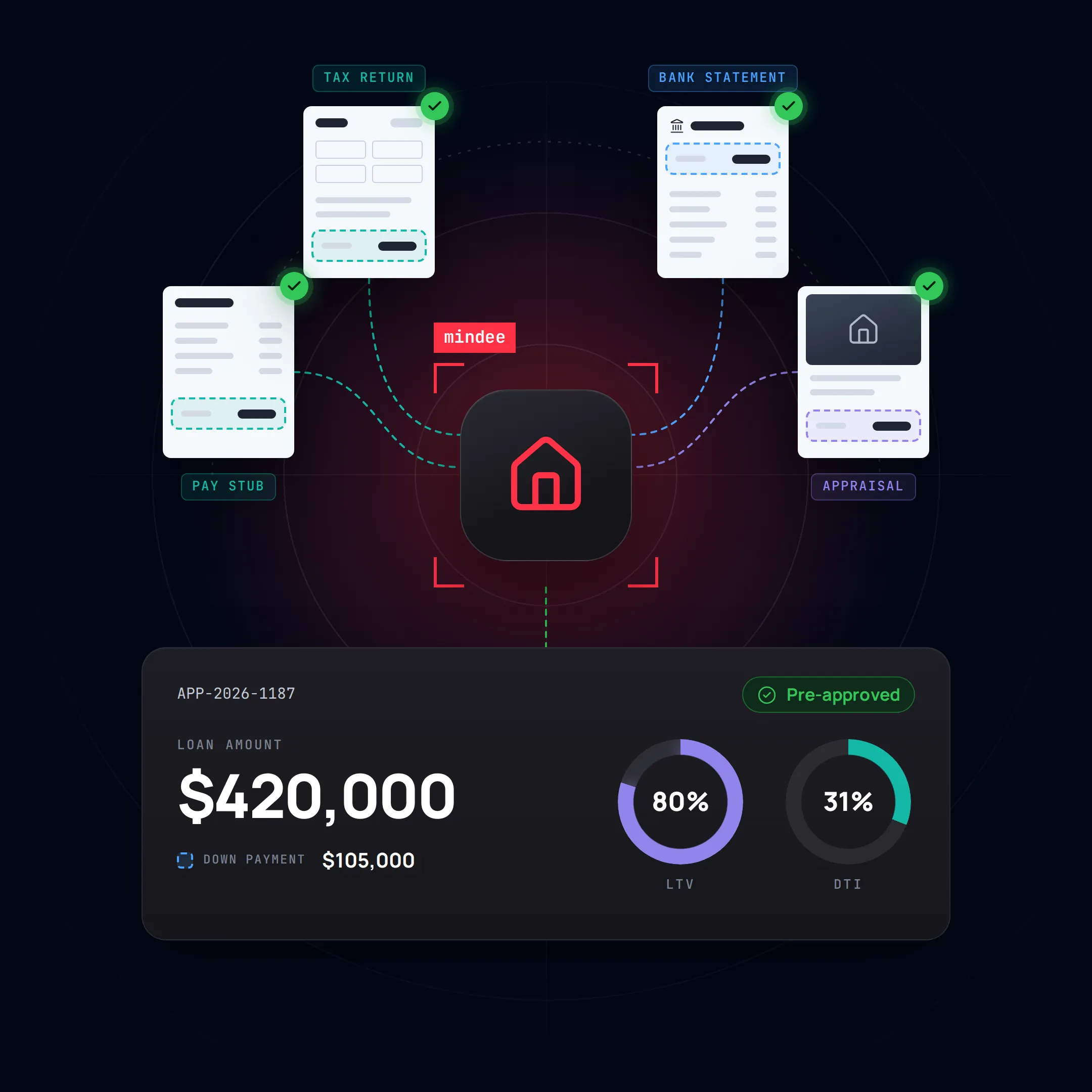
Extract and cross-check payslips, bank statements, tax returns and IDs in real time. One API for lenders, brokers and credit software to complete files at upload, verify income across documents and feed clean data to underwriting and scoring.
14-day free trial
No credit card required
Trusted by top-tier teams worldwide






Every incomplete file is a borrower you might lose
Three payslips, three months of statements, two tax returns, an ID: one missing page or one figure that doesn’t add up, and the file goes back to the borrower. Meanwhile, analysts retype income and debts by hand, and a faster lender makes the offer.

1
Application
The borrower applies directly or through a broker
2
Upload documents
Friction
Missing payslip or outdated statement: a new upload is requested by email.
3
Manual review
Friction
Files wait in the underwriting queue, figures retyped by hand.
4
Mismatch
Cross-checks
Friction
Income on the payslip ≠ salary on the bank statement. Back to step 02.
5
Loan approved
If the borrower hasn’t signed elsewhere
Every document in a borrower file, read in one flow
Mindee recognises each document automatically and extracts the fields you need, ready to be checked against each other.

Auto-classify documents

ID card
- Surname
- Given names
- Date of birth
- Document number
- Expiry date
- Nationality
- Sex
- Place of birth
- Issuing country
- Issue date
- Issuing authority
- Address
- Personal number
- MRZ lines
- Photo
- Signature
Passport
- Surname
- Given names
- Date of birth
- Passport number
- Expiry date
- Nationality
- Sex
- Place of birth
- Issuing country
- Issue date
- Passport type
- MRZ line 1
- MRZ line 2
- Photo

Pay stub
- Employee name
- Employer name
- Pay period start
- Pay period end
- Gross salary
- Net pay
- Job title
- Contract type
- Employer address
- Employer registration number
- Employee address
- Employee ID
- Social security number
- Employment start date
- Pay date
- Net before tax
- Income tax withheld
- Year-to-date gross
- Hours worked
- Salary details (base, overtime, bonuses)

Bank statement
- Account holder name
- IBAN
- Bank name
- Period start
- Period end
- Opening balance
- Closing balance
- Transactions (date, description, amount)
- Account holder address
- Bank address
- Account number
- BIC / SWIFT
- Statement date
- Total credits
- Total debits
- Currency

Tax return
- Taxpayer names
- Tax year
- Reference tax income
- Total tax due
- Tax ID / fiscal number
- Notice reference
- Address
- Filing status / household
- Number of tax shares
- Gross income
- Taxable income
- Withholding & payments
- Refund or balance due
- Issue date

Mortgage
- Borrower names
- Lender name
- Loan amount
- Interest rate
- Loan term
- Monthly payment
- Property address
- Co-borrower
- Rate type (fixed / variable)
- APR
- Start date
- First payment date
- Maturity date
- Insurance cost
- Fees
- Total cost of credit
- Loan reference
- Signature date

Proof of address
- Holder name
- Full address
- Issue date
- Document type (energy bill, tax notice, …)
- Issuer name
- Street
- Postal code
- City
- Country
- Period covered
- Reference / account number
From upload to a checked document process, in five steps
The flow behind document-based underwriting: classify each upload, extract income, debts and identity, check the file is complete and consistent, then send decision-ready data to your LOS or scoring engine and route discrepancies to an analyst.

Collect
Loan application or broker file with documents

Mindee Classify
ID, payslips, bank statements, tax return

Mindee Extract
Employer, net income, salary credits, debts…
VERIFY
{Your business rules to check}
Cross-check

Valid data is automated
Decision-ready data sent to underwriting

Exceptions to human
Flag for human review
usual tools for this


... and similar ones!
Prototype in minutes, go live with the API
Test the full document flow with a no-code scenario first. When the results convince your team, plug the same models into your platform.
Step 1 : Prototype
Run a proof of concept in Make
No code, no IT ticket. Send files and see Mindee read them.

Loan application form
ID card, payslips, bank statements, tax return

Mindee Classify & Extract
Full name, employer, net income, monthly salary credits

LOS
One record per borrower. Ready to underwrite.

Slack
Alert on missing documents or income mismatches
Step 2 : Production
Integrate the API into your platform/workflow
Same models, same results connected to your whole system in a few days.
mindee docs
$ pip install mindee

Your data sources

Mindee API
Your core system
What changes for each team
Engineering, finance and product don't look for the same thing in document-based projects. Here is what each of them gets.

3 teams · 1 platform
Technical
· CTOs, Lead devs
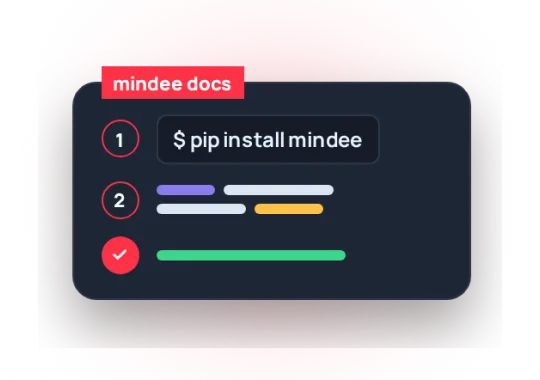
A fast, documented API, live in days, with no extra tech debt

Robust infrastructure and features that scale.
Low effort : up-to-date docs and SDKs
No production surprises : continuous monitoring and drift protection
finance & ops
· CEOs, CFOs, COOs
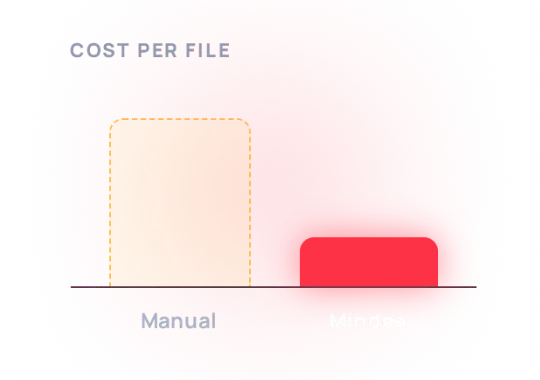
Process more loan files per analyst, with time spent on credit decisions, not data entry
Lower costs, stronger compliance, better margin
Change management eased by no-code templates
Data protected : SOC 2 Type II infrastructure, GDPR compliant
product
· CEOs, Product managers
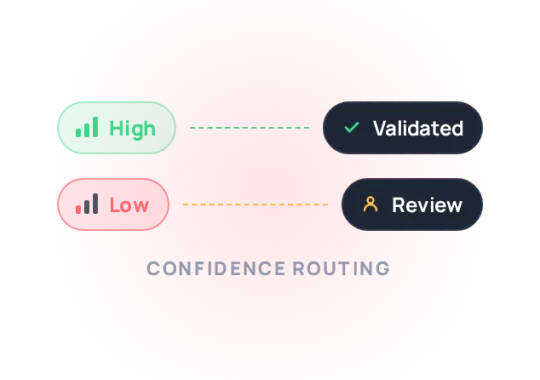
Complete loan files at upload, so borrowers never get the “missing document” email
- Missing or outdated documents flagged before the borrower leaves
- Income and debts structured for your scoring rules
- Doubtful files routed to an analyst, never a dead end
Results measured by customers, in average
Teams that process loan files with Mindee spend less time checking documents and approve loans faster. Here’s what changes once document checks run on autopilot: less manual review, more loan files handled by the same team, and a fast path from first test to production.

-68
%
less time spent on document checks
TIME PER FILE - Before/After Mindee
5
k
documents processed every month
Volume - last 6 months
2 weeks
from first API call to production

Test - integrate - live

Integrate Mindee into your workflow in minutes with SDKs & no-code tools
Go live in minutes using our verified Zapier & Make.com app with zero coding, or integrate seamlessly via our well-documented REST API built for developers. SDKs available for Python, .NET, Node.JS, Java, Ruby, PHP.
Integrations

Enterprise-grade security
Our API has a SOC 2 Type II certified infrastructure and is GDPR Compliant to ensure your file information remains protected at all times.

EU or US hosting available

GDPR, CCPA Compliant
Security center
FAQ about this use case
Can't find what you're looking for? Our team answers within one business day.
About Mindee
How do lenders calculate the debt-to-income ratio?
The debt-to-income (DTI) ratio is a borrower’s total monthly debt payments divided by their gross monthly income, expressed as a percentage. For example, $2,000 in monthly debt payments with $6,000 in gross monthly income gives a DTI of 33%. Many lenders look for 36% or less, though the maximum depends on the loan type and program. To calculate it, lenders need reliable figures from several documents: gross income from payslips, and existing debt payments from bank statements and mortgage statements. Mindee extracts these figures automatically, so analysts can calculate the DTI without retyping any data.
What counts as proof of income for a loan?
For employees, proof of income usually means recent payslips (pay stubs), often supported by W-2s, tax returns or an employer letter. Self-employed borrowers typically provide tax returns, 1099 forms, profit and loss statements and bank statements showing regular deposits. Lenders often ask for several documents because each one confirms the others. Mindee extracts the key figures from payslips and bank statements, such as gross and net pay, YTD earnings, employer name and salary deposits, so you can verify income across documents in seconds instead of reading every page.
How long does loan underwriting take, and how can it be faster?
Underwriting can take from a few days to several weeks, depending on the type of loan and how complete the borrower’s file is. A large share of that time goes to collecting documents, retyping their data and going back to the borrower for missing or inconsistent information. With Mindee, each document is classified and its data extracted in seconds as soon as it is uploaded, and incomplete files are flagged immediately. Underwriters start from a ready-to-review file and spend their time on credit decisions rather than data entry.
Can Mindee cross-check information across a borrower’s documents?
Yes. Since every document becomes structured data, consistency checks can run automatically across the whole file. For example, you can check that the net pay on the payslips matches the salary deposits on the bank statements, that the name and address are the same on the ID, the proof of address and the application, and that the monthly payment on an existing mortgage statement appears in the account’s transactions. Consistent files go straight to underwriting, and those with discrepancies are flagged with the fields that don’t match. This saves time and helps detect altered or inconsistent documents before a credit decision is made.



Ready to approve loans without the paper chase ?
Extract and cross-check payslips, bank statements, tax returns and IDs in real time. Test it on a batch of your own borrower files in minutes.
SOC 2 Type II & RGPD
No credit card required