

document ai


4.8/5 (30+ reviews)
Invoice capture built for platforms and high-volume AP teams
Extract and match invoices, purchase orders, delivery notes and credit notes from any supplier, in any layout. One API to power AP, ERP and e-invoicing platforms, and to clear invoice volumes for accounting firms and shared service centers.
14-day free trial
No credit card required
Trusted by top-tier teams worldwide






Every new supplier layout is a manual entry waiting to happen
Thousands of suppliers, each with its own PDF. Scans, multi-page line tables, credit notes that look like invoices, quantities that don’t match the delivery note: every exception lands on someone’s desk, your customer’s or your own.

1
Invoice received
A supplier sends a PDF, a scan or a paper invoice
2
Upload documents
Friction
No template for this supplier: header, VAT and lines keyed in by hand.
3
Manual review
Friction
Exceptions pile up in a review queue, checked line by line.
4
Mismatch
Cross-checks
Friction
Quantity on the invoice ≠ quantity on the delivery note. Back to the supplier.
5
Invoice paid
Often late, and too late for any early-payment discount
Every document behind an invoice, read in one flow
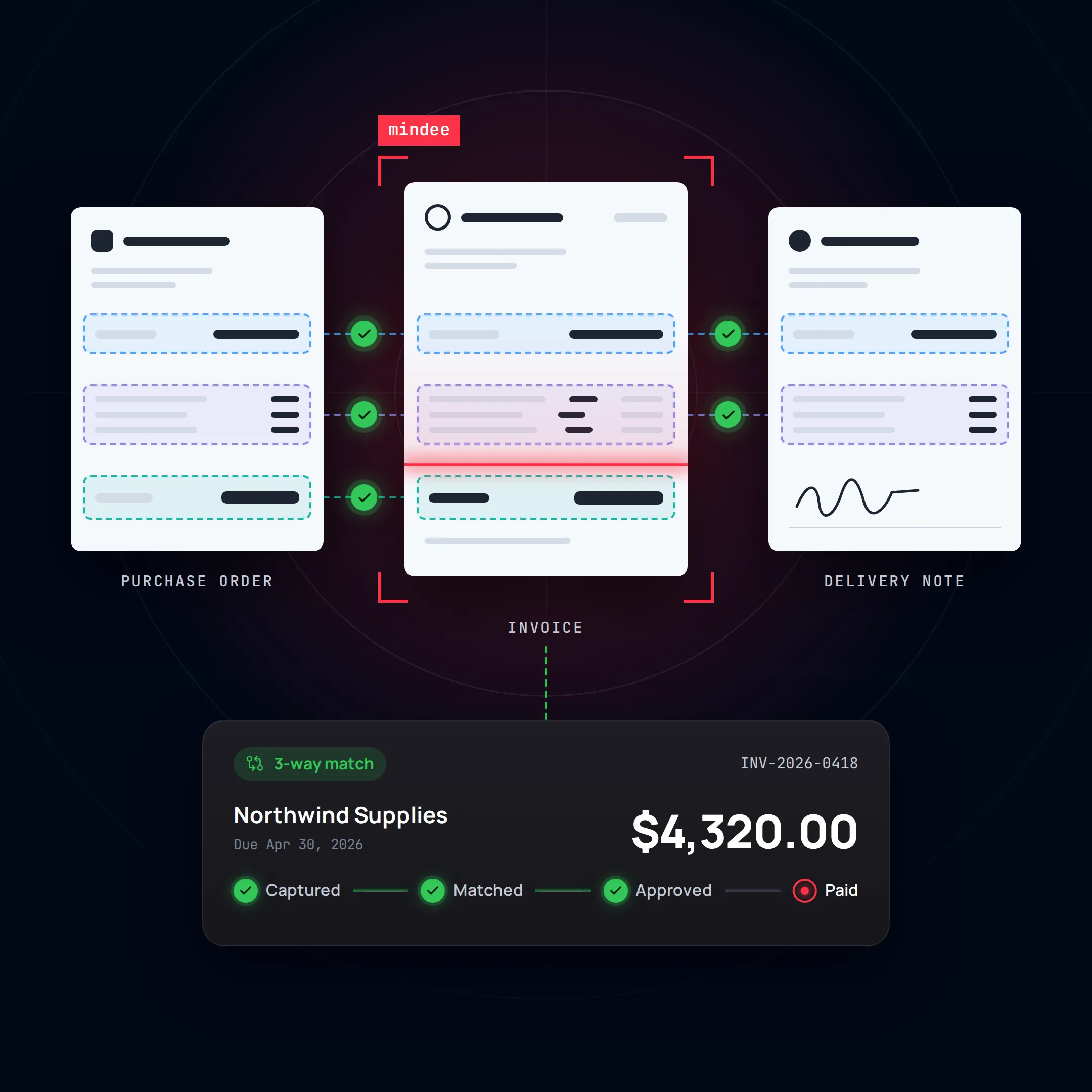
Mindee recognises each document automatically and extracts the fields you need, ready to be checked against each other.

Auto-classify documents

Invoice
- Invoice number
- Invoice date
- Due date
- Supplier name
- Supplier address
- Supplier VAT number
- Supplier company registration
- Supplier IBAN
- Customer name
- Customer address
- Customer VAT number
- PO & reference numbers
- Line items
- Total net
- Taxes (rate, base, amount)
- Total tax
- Total amount
- Currency
- Payment terms
- Document type (invoice / credit note)

Purchase order
- PO number
- PO date
- Buyer name
- Supplier name
- Line items (SKU, description, quantity, unit price, amount)
- Total amount
- Buyer address
- Supplier address
- Shipping address
- Delivery date
- Payment terms
- Total net
- Total tax
- Currency
- Requester / contact
- Incoterms

Delivery note
- Delivery note number
- Delivery date
- Supplier name
- Customer name
- PO number
- Line items (SKU, description, quantity ordered, quantity delivered)
- Supplier address
- Delivery address
- Order date
- Carrier
- Tracking number
- Number of packages
- Total weight
- Receiver name
- Signature

Credit note
- Credit note number
- Credit note date
- Original invoice number
- Supplier name
- Customer name
- Total amount
- Reason for credit
- Supplier address
- Supplier VAT number
- Customer address
- Customer VAT number
- Line items
- Total net
- Taxes
- Total tax
- Currency
- Refund method
From upload to a checked document process, in five steps
The flow behind automated AP: classify each document, extract header and lines, match invoice, PO and delivery note, then post clean invoices and route exceptions to review.

Collect
Invoice email, supplier portal upload or scan batch

Mindee Classify
Invoice, credit note, purchase order, delivery note

Mindee Extract
Supplier, VAT, lines, totals, due date…
VERIFY
{Your business rules to check}
Cross-check

Valid data is automated
Invoice posted, ready to approve and pay

Exceptions to human
Flag for human review
usual tools for this


... and similar ones!
Prototype in minutes, go live with the API
Test the full document flow with a no-code scenario first. When the results convince your team, plug the same models into your platform.
Step 1 : Prototype
Run a proof of concept in Make
No code, no IT ticket. Send files and see Mindee read them.

AP inbox
Invoices, purchase orders, delivery notes

Mindee Classify & Extract
Supplier, invoice number, VAT, total amount, due date

ERP (Sage, Odoo, ...)
One entry per invoice. Ready to approve.

Slack
Alert on duplicate invoices or matching errors
Step 2 : Production
Integrate the API into your platform/workflow
Same models, same results connected to your whole system in a few days.
mindee docs
$ pip install mindee

Your data sources

Mindee API
Your core system
What changes for each team
Engineering, finance and product don't look for the same thing in document-based projects. Here is what each of them gets.

3 teams · 1 platform
Technical
· CTOs, Lead devs
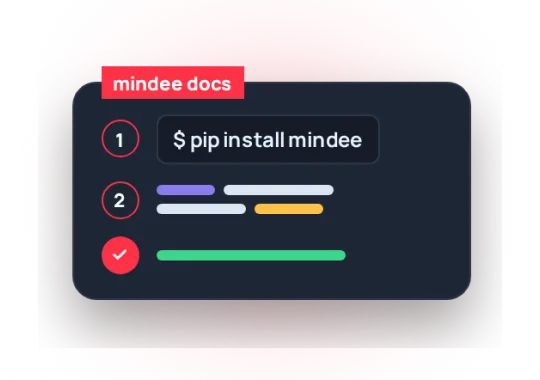
A fast, documented API, live in days, with no extra tech debt

Robust infrastructure and features that scale.
Low effort : up-to-date docs and SDKs
No production surprises : continuous monitoring and drift protection
finance & ops
· CEOs, CFOs, COOs
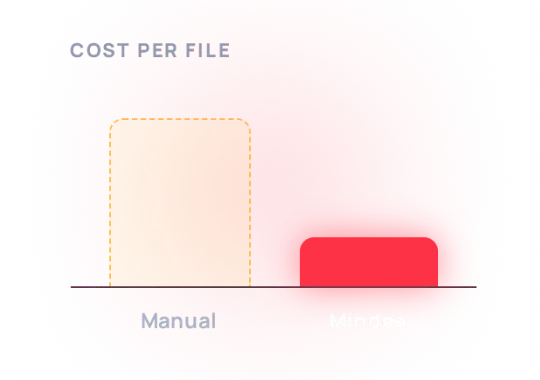
Process more invoices per FTE, with a cost per document you can price into your offer
Lower costs, stronger compliance, better margin
Change management eased by no-code templates
Data protected : SOC 2 Type II infrastructure, GDPR compliant
product
· CEOs, Product managers
Ship invoice capture your customers switch on in minutes, for any supplier
- No supplier templates to build or maintain
- Line items extracted for three-way matching
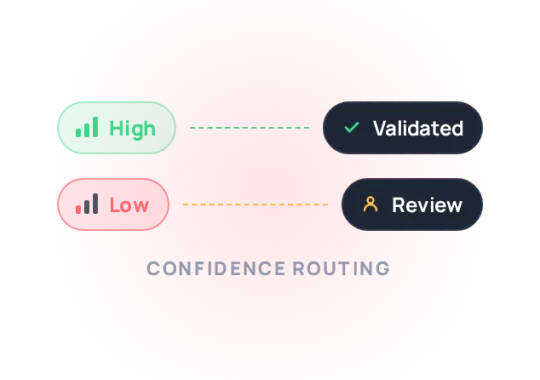
- Confidence scores to auto-post clean invoices and route the rest
Results measured by customers
AP, spend and accounting platforms use Mindee as the extraction layer behind their invoice capture. Here’s what changed for Spendesk: less manual checking, more documents handled by the same team, and a fast path from first test to production.

-70
%
less time spent on document checks
TIME PER FILE - Before/After Mindee
400
k
documents processed every month
Volume - last 6 months
2 weeks
from first API call to production

Test - integrate - live

Mindee allows us to offer major advantages to our customers, saving time and manual labor. They are extracting data from 13,000 documents per day with fast and accurate extractions on Spendesk, thanks to Mindee.

Full customer story

Integrate Mindee into your workflow in minutes with SDKs & no-code tools
Go live in minutes using our verified Zapier & Make.com app with zero coding, or integrate seamlessly via our well-documented REST API built for developers. SDKs available for Python, .NET, Node.JS, Java, Ruby, PHP.
Integrations

Enterprise-grade security
Our API has a SOC 2 Type II certified infrastructure and is GDPR Compliant to ensure your file information remains protected at all times.

EU or US hosting available

GDPR, CCPA Compliant
Security center
FAQ about this use case
Can't find what you're looking for? Our team answers within one business day.
About Mindee
What is accounts payable automation?
Accounts payable (AP) automation is the use of software to process supplier invoices with as little manual work as possible, from the moment they are received to the moment they are paid. A typical automated workflow captures invoices from email, uploads or scans, extracts their data, matches them against purchase orders and goods receipts, routes them for approval, and exports them to the ERP for payment. Data extraction is the first step, and often the main bottleneck. Mindee turns every invoice into structured data in seconds, whatever its layout or language, so the rest of your AP workflow can run automatically.
What is three-way matching in accounts payable?
Three-way matching is a control that compares three documents before an invoice is paid: the purchase order (what was ordered), the delivery note or goods receipt (what was received) and the supplier invoice (what is being billed). Items, quantities and prices must agree across the three, within your tolerance thresholds. Done manually, this check is slow and error-prone, especially on invoices with many lines. Mindee extracts line items from all three documents, so matching can run automatically and your AP team only reviews the lines that don’t match.
What is AI used for in accounts payable?
AI is mainly used in AP to read invoices: it extracts supplier details, amounts, taxes and line items without templates, even from scans or unusual layouts. The extracted data then makes other checks possible: detecting duplicate invoices before they are paid, flagging unusual amounts or price changes, and spotting changes in a supplier’s bank details, a common sign of payment fraud. Mindee provides this extraction layer with a confidence score for every field, so you can choose what to approve automatically and what to send for review.
Does Mindee replace my AP software or ERP?
No. Mindee is the document extraction layer that works with your existing tools. Finance teams connect it to their ERP or accounting software, such as SAP, NetSuite, Sage, Xero or QuickBooks, through the API or with no-code tools like Zapier, Make or n8n. AP software vendors also integrate Mindee into their own product to offer invoice capture to their customers. You keep your approval workflows and payment processes, and simply remove the manual data entry at the start of the process.



Ready to clear invoice volumes without manual entry?
Extract and match invoices, purchase orders, delivery notes and credit notes. Test it on a batch of your own documents in minutes.
SOC 2 Type II & RGPD
No credit card required