.svg)
.svg)


Table of Contents

The snapshot
The traditional mortgage lifecycle routinely bleeds 30 to 45 days, stalled by paper-heavy workflows and redundant data entry. Having overseen lending operations, I know underwriting teams are not lacking work ethic; they are trapped in unscalable legacy infrastructure.
Mortgage process automation deploys artificial intelligence (AI) and automated document processing to clear operational gridlock, accelerating loan origination while compressing overhead. We will detail how AI restructures the lending lifecycle, who stands to benefit, the mandatory components of a modern automation stack, and how to integrate these systems without interrupting active pipelines.
Understand the critical role of mortgage process automation
Automation replaces manual data handling with programmatic, digital workflows, fundamentally shifting how lenders underwrite loans.
Differentiate basic digitization—converting PDFs into flat, unsearchable image files—from automated process automation. Modern frameworks utilize optical character recognition (OCR) and machine learning to accurately interpret complex financial documents.
When consulting with lending CTOs, the immediate concern is always regulatory risk. However, true digital transformation hardens compliance. Automated data capture generates an immutable audit trail for every extracted field, eliminating the human error inherent in manual entry and ensuring strict adherence to data protection regulations.
Identify the bottlenecks stalling your loan originations
Manual document sorting and disconnected legacy systems exhaust underwriting bandwidth and produce high-friction borrower experiences.
Consider the operational friction: a standard mortgage application demands extensive documentation, including W-2s, bank statements, and tax certificates. Forcing loan officers to key this data into legacy software guarantees transcription errors and inflates processing timelines.
.webp)
Traditionalists argue automation destroys the "human touch" in lending. The reality is the exact opposite. Eradicating manual data entry liberates loan officers from administrative drudgery, reallocating their time toward advising clients on complex financial scenarios.
Identify the stakeholders and beneficiaries of a digital pipeline
Mortgage process automation eliminates manual handoffs, creating compounding benefits for financial services providers and the clients they serve.
The lending lifecycle requires multiple stakeholder involvement, which traditionally means passing extensive documentation across disjointed legacy systems. Mortgage lenders bear the brunt of this operational drag, losing margins to inefficiencies.
By deploying digital tools and rpa (robotic process automation) within a hybrid process—where AI handles data extraction and humans handle edge cases—lenders drastically reduce underwriting fatigue.
This operational shift directly elevates borrowers’ experiences. When loan officers are no longer acting as document chasers, customer satisfaction skyrockets because lenders can finally deliver truly personalized borrower experiences.
Leverage AI to extract and validate mortgage data instantly
Document AI platforms utilize natural language processing (NLP) to instantly extract structured JSON data from unstructured borrower files.
A typical borrower upload consists of a chaotic, 50-page PDF mixing pay slips, ID cards, and tax returns. Processing this manually drains resources. Instead, lenders build automated workflows using tools like Mindee’s Classify API. This acts as a programmatic routing engine, analyzing incoming files to categorize them by document type instantly.
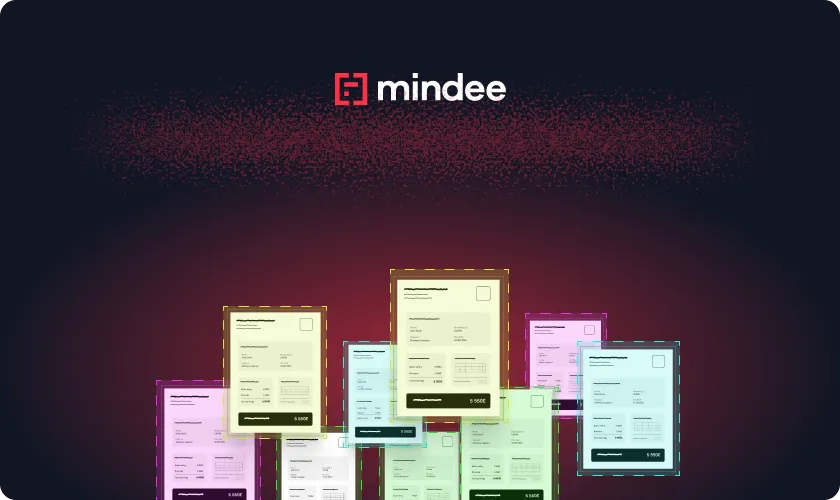
Once classified, the Extract API automatically pulls critical variables—gross income, tax withholdings, dates, and names. By deploying pre-trained document skills built specifically for financial documents, lenders achieve near-instant income and employment verification, transforming a messy PDF payload into clean, database-ready data.
Examine real-world use cases and success stories
Lenders digitizing well-trod processes achieve up to an 80% reduction in processing times and save over $1,200 per loan.
The theoretical benefits of automation are proven by market data. A recent study highlights that mortgage companies adopting intelligent automation for document processing saw up to an 80% reduction in processing times. Additionally, adopting end-to-end digital platforms yields average cost-per-loan savings exceeding $1,200, justifying your immediate pricing investments.
Consider the digitization of underwriting tasks: modern lenders utilize mobile and contactless document capture to ingest loan applications instantly. Beyond basic data extraction, automation accelerates complex disclosures and verification, and can even programmatically order and manage titles and reports. Integrating these workflows with marketing and CRM platforms like ice surefire ensures process visibility and maintains built-in tracking and audit trails for total compliance. While change management and adoption pose initial hurdles, the typical 12-to-18-month ROI payback period makes the transition undeniable.
.webp)
Map your implementation strategies and technical considerations
Enterprise implementation demands a phased approach, prioritizing system compatibility and intelligent data capture over rip-and-replace deployments.
Implementing automation is not simply about buying software; it’s about strategic integration. Lenders must evaluate advanced document management systems that connect directly into a centralized hub or legacy LOS via direct REST APIs or official SDKs (client libraries).
The ultimate goal is automated task orchestration.
By combining intelligent document processing (idp) capabilities with robotic process automation, institutions can bridge the gap between modern AI extraction and legacy mainframes. Furthermore, integrating compliance and fraud prevention tools, alongside automated valuation models and ice fee solutions, creates a unified, secure pipeline. Leveraging real-time mortgage analytics ensures that this transition remains measurable, optimized, and aligned with your core business objectives.
Final thoughts
Mortgage process automation is a baseline requirement for financial institutions aiming to capture market share. Parsing complex borrower files programmatically yields a decisive competitive advantage.
The lending sector is aggressively shifting toward fully digital mortgage ecosystems, integrating eNotes and continuous learning AI workflows. Adopt digital infrastructure today, stop fighting paper, and let AI drive your origination pipeline.

About

.svg)


.webp)
.webp)