
.svg)
.svg)

.webp)
Table of Contents

The snapshot
Imagine, back in your early days managing a scaling tech firm's infrastructure, you may have watched your accounts payable (AP) team drown in paper. You had brilliant finance professionals spending their afternoons tracking down missing purchase order (PO) numbers and squinting at blurry, coffee-stained PDF scans sent by external vendors. It was a severe compliance risk for your data integrity.
Automated invoice processing transforms a fragile financial bottleneck into a scalable, error-free data pipeline. In this guide, we will break down the underlying technology, the core features you need, the specific financial metrics improved, and how you can implement it without disrupting your current ERP stack.
Understand the core: what automated invoice processing actually is
Automated invoice processing uses Artificial Intelligence (AI) and Optical Character Recognition (OCR)—technology that converts scanned images into searchable data—to instantly extract, validate, and route information from unstructured invoices into your financial systems.
For decades, the standard procedure in AP departments was the manual "stare-and-compare" method. A human operator would open an email, download a PDF, read the totals, and manually type those figures into an enterprise resource planning (ERP) system. This introduces unacceptable error rates.
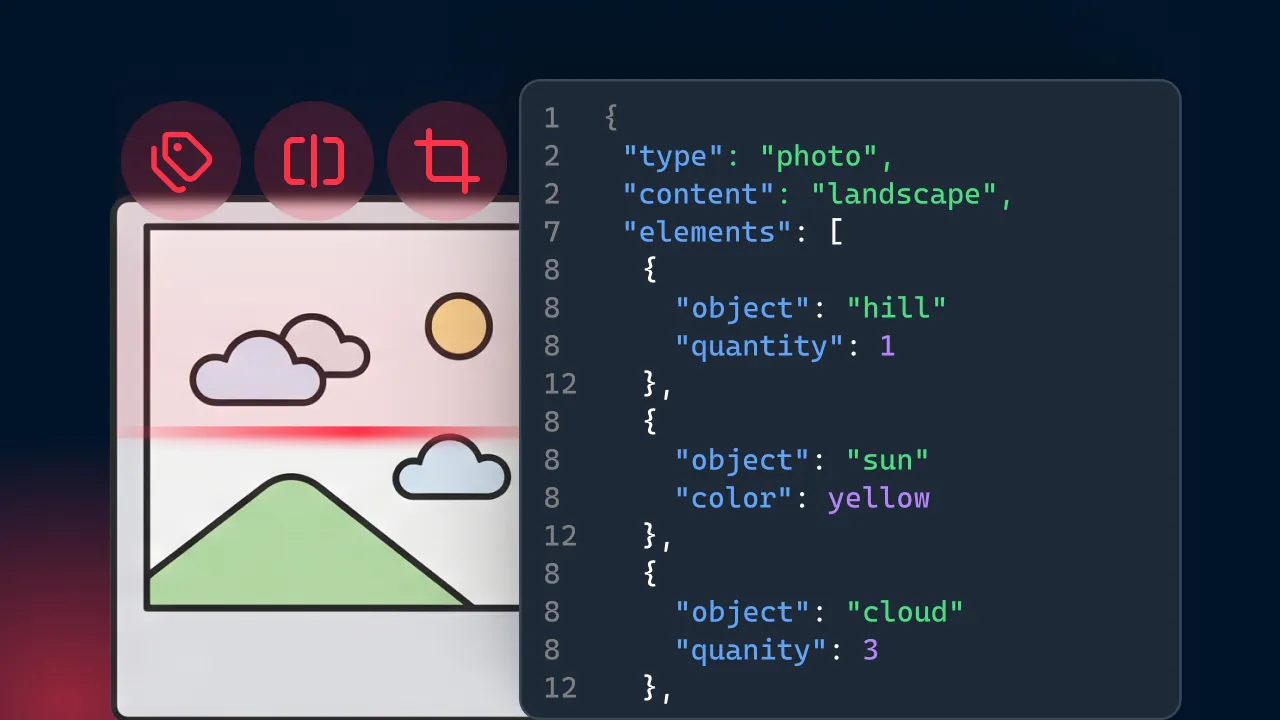
Today, intelligent document processing (IDP) flips that model. When an invoice enters the system, AI models instantly map the unstructured pixels on a page to structured data formats like JSON. It shifts the accounting department's role from manual data entry to strategic exception management.
Trace the workflow: how automation transforms accounts payable
A modern automated pipeline follows four sequential stages: ingestion, extraction, validation, and routing.
To understand the architecture of a touchless invoice pipeline, let's examine the data lifecycle:
- Ingestion: The system captures documents worldwide from any source—whether that is a dedicated AP email inbox, a mobile photo from a field technician, or an SFTP server.
- Extraction: The AI pulls structured data (totals, taxes, dates, names, table line items) from unstructured documents. For instance, using Mindee's Extract product, you automatically extract this data from PDFs or photos. Mindee provides "off-the-shelf" AI models for common documents (invoices, receipts) and a custom API builder to train models for company-specific layouts.
- Validation: The extracted data is immediately cross-referenced against your internal databases. This frequently involves three-way matching—an accounting control cross-referencing the vendor's invoice, the internal purchase order, and the receiving report to ensure authorization.
- Routing: Fully validated invoices bypass human review and push directly to your payment gateway via REST API.
.webp)
Key features of automation software you actually need
The difference between a basic scanning tool and an enterprise-grade platform lies in its engine. Modern platforms move beyond simple text recognition, utilizing AI-powered OCR to parse complex financial documents accurately.
When mapping out an integration, engineering and finance teams should look for these core functionalities:
Measure the impact: why an API outperforms manual entry
Implementing automation directly reduces operational overhead, eliminates data integrity issues, and unlocks early payment discounts.
I’ve seen firsthand how a streamlined automated pipeline improves specific financial metrics. Reducing processing time from three days to three seconds is a substantial win, but the benefits compound:
- Absolute accuracy: Human operators have a proven error rate when typing complex 12-digit international bank account numbers (IBANs). An API does not suffer from keystroke fatigue.
- Instant audit trails: Every time a document is parsed, the system logs the exact timestamp of receipt, the extracted data coordinates, and the approving user. This makes compliance and regulatory audits practically painless.
- Capital optimization: Because invoices are approved instantly, your organization can routinely capture 2% early payment discounts that were previously lost to slow manual routing.
Implement best practices: strategies to optimize your invoice pipeline
Technology alone cannot fix a fundamentally broken process. To maximize your return on investment, you must align the software with strict operational standards.
Engineering and finance teams should enforce these specific practices to maintain a high-performing pipeline:
- Standardize ingestion at the source: Optimize your initial invoice capture and data extraction by mandating that vendors submit digital invoices to a centralized API endpoint or dedicated inbox, eliminating rogue paper trails.
- Enforce rigid validation: Build a dynamic approval workflow that automatically requires a strict three-way match for any invoice exceeding a specific financial threshold, ensuring you always meet baseline compliance requirements.
- Manage by exception: Configure customizable rules and alerts so that low-confidence extractions are immediately routed to human operators. Providing mobile access allows department heads to clear these bottlenecks directly from their phones.
- Monitor the metrics: Utilize your platform's reporting and analytics to continuously track invoice accuracy rates. When you notice high invoice exception rates tied to a specific vendor's format, use continuous learning features (like RAG) to correct the AI model.
- Capitalize on speed: Touchless processing accelerates approval times, strengthening vendor relationships and guaranteeing you consistently hit the windows for early payment discounts, all while maintaining continuous audit trails.
Execute the transition: how to implement automation in your stack
Successful implementation requires mapping your current workflow to locate specific bottlenecks before writing a single line of code.
Overhauling your AP process requires precision. We advise engineering and finance teams to take a phased rollout approach:
- Step 1: Audit. Map your existing approval chains. Pinpoint exactly where your invoices sit idle today.
- Step 2: Integrate. Connect the automation tool to your ERP. If you are building custom applications, leveraging official SDKs (Client Libraries) is the most developer-friendly method. Mindee provides officially supported, open-source libraries in Python, Node.js, Java, .NET (C#), Ruby, and PHP. This gives you type safety, built-in error handling, and code editor autocompletion without writing boilerplate HTTP code.
- Step 3: Train. Shift your finance team's core competencies. Train them to manage the dashboard and resolve exceptions, rather than inputting raw data.
- Step 4: Optimize. Use reporting dashboards to track your invoice exception rates and isolate problematic vendors over time.
{{cta-awareness-1="/in-progress/global-blog-elements"}}
Select the right tool: software selection criteria for scale
Buying software to solve data integrity challenges requires aligning developer experience with finance and procurement needs.
When evaluating cloud-based platforms, look beyond baseline capabilities. You require a platform solving the messy, real-world problems of document ingestion:
- Scalability requirements for messy files: What happens when a vendor sends a single 50-page PDF containing a whole day's worth of mixed mail? Tools like Mindee's Split handle this seamlessly. The AI detects where each individual document begins and ends, automatically splitting the large file into logical, separate documents.
- Intelligent routing and customizable approval workflows: You need an intelligent routing engine. Mindee's Classify feature analyzes incoming files and automatically categorizes them by type (e.g., identifying a contract versus an invoice). This allows you to sort documents instantly and route them to the correct extraction pipeline.
- Integration with accounting and ERP systems: Ensure the tool supports your ecosystem, whether through direct REST API HTTP calls or no-code connectors like Zapier and Make. Support for complex data like multi-currency support, product catalog integration, and recurring billing options is essential.
- Security and compliance: For strict privacy laws (like GDPR), higher pricing tiers allow you to force Mindee to process your documents only in specific geographic regions (e.g., only in Europe) and enforce strict retention policies. Look for solutions with role-based permissions to restrict sensitive financial access.
- Cost and ROI: Software should scale with your volume. Mindee offers tailored plans from a Starter tier for fast prototyping to a Business tier built for heavy workflows with unlimited continuous learning (RAG), backed by dedicated vendor support.
{{cta-conversion-1="/in-progress/global-blog-elements"}}
Final thoughts
Automating your invoice processing pipeline is one of the highest ROI technical investments a business can make.
By relying on AI-powered extraction, intelligent document splitting, and continuous learning, you eliminate manual data entry, accelerate your accounts payable, and secure your audit trails.
The transition from a paper-heavy bottleneck to a streamlined JSON payload doesn't require months of development. To see exactly how your own vendor invoices look translated into structured data, sign up for the platform and test your files against an open API sandbox today.

About

.svg)


.webp)

.webp)
.webp)